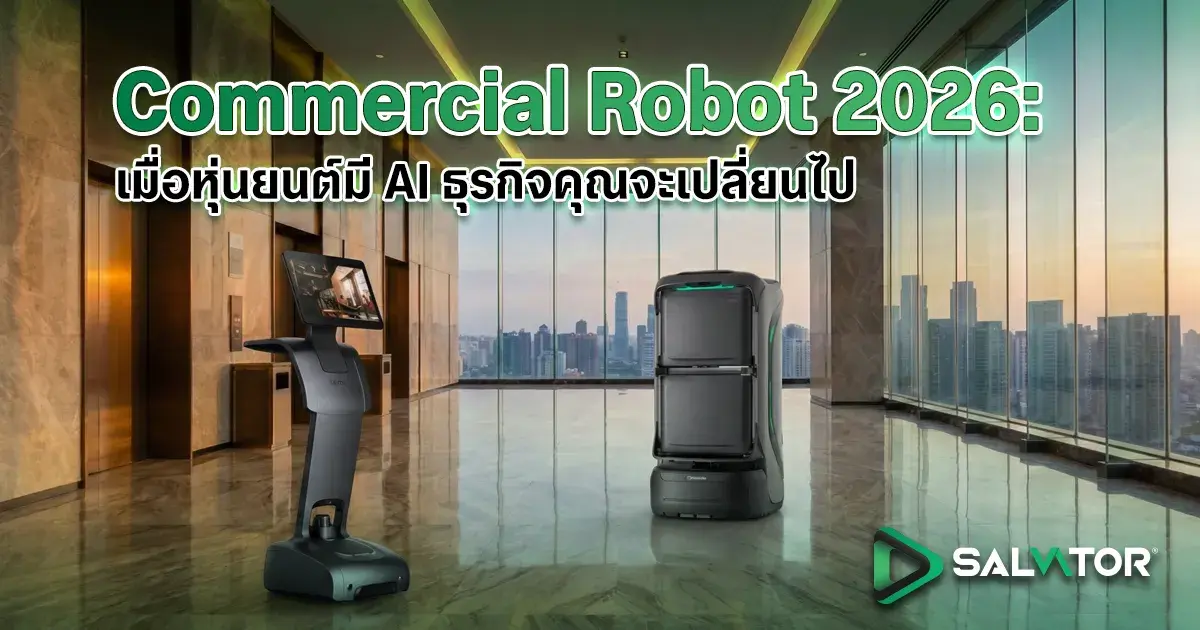
What is a Commercial Robot? A Guide to Choosing Service Robots for Modern Businesses in 2026

What is a Commercial Robot? A Guide to Choosing Service Robots for Modern Businesses in 2026

Commercial Robots are commercial-grade robots, also known as Service Robot , which are designed to work alongside humans (Cobots) in public spaces such as hospitals, offices, hotels, or shopping malls. Their key features include the ability to move autonomously, interact with people, and perform repetitive tasks efficiently—differing from Industrial Robots , which focus on heavy-duty tasks in closed factory environments.

By 2026, robotic technology will become more affordable, making it practical for small and medium-sized enterprises (SMEs) to adopt and elevate their service standards to match those of larger organizations.

Table of Contents

Types of Commercial Robots Classified by Usage

Choosing the right type of service robot to meet your business needs is essential. We have categorized the popular choices for 2026 into 3 main groups to make your decision easier:

หุ่นยนต์ต้อนรับ temi V3 หุ่นยนต์บริการ AI อัจฉริยะ พร้อมหน้าจอโต้ตอบ สำหรับงานประชาสัมพันธ์และนำทางในอาคาร

1. Reception & Guide Robots

Acting as the "face" of the organization, they create a First Impression with interactive intelligence that goes beyond just being a machine.

  • Greeting and Registration: Recognizes customer faces, greets them, and automatically assists with visitor registration.
  • Intelligent Navigation: Accurately guides visitors to meeting rooms or various departments.
  • Information & Video Calls: Answers basic questions and can instantly initiate a video call to a human receptionist if complex assistance is required.

Recommended: Robot temi V3, which comes with an interactive screen and voice command system. Suitable for lobbies and service centers. View details of the reception robot temiV3

หุ่นยนต์ส่งของอัตโนมัติ Salvator หุ่นยนต์เดินเอกสารและส่งพัสดุภายในออฟฟิศ ช่วยลดภาระงานและแก้ปัญหาขาดแคลนแรงงาน

2. Delivery Robots (Delivery & Logistics)

Designed to reduce employee "walking time" (Last-mile delivery within buildings), allowing personnel to focus on more important tasks.

  • Offices: Transports documents and parcels between departments.
  • Restaurants and Hotels: Serves food, drinks, or provides room service 24 hours a day.
  • Hospitals: Transports medication, medical supplies, and lab results, reducing the risk of contamination.

Recommended: temiGo for delivery in offices/hospitals, and Ybot , the popular food serving robot. View details temiGo and View details Ybot

หุ่นยนต์ รปภ. รักษาความปลอดภัย เดินลาดตระเวนโรงงานและคลังสินค้าในเวลากลางคืน พร้อมระบบกล้องตรวจจับอัจฉริยะ

3. Security and Wellness Robots

This technology group focuses on quality of life and safety (Safety & Wellness), divided into:

  • Security Robots (Security): Automatically patrol areas, record footage of events, and instantly alert the control center upon detecting abnormalities, such as intruders or fires.
  • Elderly Care Robots (Wellness): Provide medication reminders, measure basic vital signs, and act as companions to relieve loneliness in Nursing Homes.

Recommended: Sentry T1 for security tasks and eNurse for patient care. View details Sentry T1 and View details Enurse

Generative AI และ Large Language Model (LLM) เข้าไปในตัวหุ่นยนต์ ทำให้เกิด Robot AI

New Trends in 2026: The Era of Generative AI (LLM)

A major turning point for the robotics industry this year is the integration of Generative AI and Large Language Model (LLM) into robots, creating a new form of Robot AI .

  • Conversation AI: Shifts from pressing menu buttons to "conversing" naturally.
  • Context Awareness: Robots understand the context of complex questions, rather than just following rigid programmed commands.
  • Learning: Quickly learns new organizational data to answer customer questions accurately.

Read more about intelligent brain technology: Intelligent AI Solutions

5 Benefits Businesses Will Gain When Starting to Use Robots

Investing in Commercial Robots is not just following a trend, but a sustainable solution to business Pain Points:

  1. Solve Labor Shortages: Fills the gap in repetitive work (Routine Task) that is hard to find people for, allowing human employees to perform higher-skilled work.
  2. Work 24 Hours: No days off, no sickness, no fatigue. Provides consistent service even during late-night shifts.
  3. Build a Modern Organization Image (Tech Image): Attracts customers and builds confidence in innovation leadership.
  4. Reduce Human Error: Eliminates mistakes caused by fatigue, such as delivering the wrong medicine or missing records.
  5. Collect Data for Analysis: Robots record customer behavior data and actual usage to analyze and improve business strategies.

What Kind of Business "Must Have" a Robot?

Currently, Service Robot have become the New Standard in many industries:

  • Smart Hospital: Helps deliver medicine and medical supplies, reduces nurse workload, and performs preliminary patient screening.
  • Smart Office: Manages admin tasks, welcomes guests, delivers documents, and handles after-hours security.
  • Hotels and Residences: Creates a "Wow Experience" with room service robots and cutting-edge reception.
  • Factories and Warehouses: Seamlessly connects parts delivery between the production line and the office.

Find the perfect solution for your business: Salvator Tech Solutions


Conclusion: Investing in Robots is Survival, Not Just an Option

In 2026, robots are not a distant future anymore, but a key to increasing efficiency and reducing long-term costs. If you are looking for ways to elevate your organization, consulting an expert to choose the "right" technology is the most important first step.

Salvator Tech is ready to provide Comprehensive Robot Consultation, from requirement analysis and robot selection to installing AI systems that answer your business needs.

Request a Demo

Please provide your complete information.

Other Interesting Content